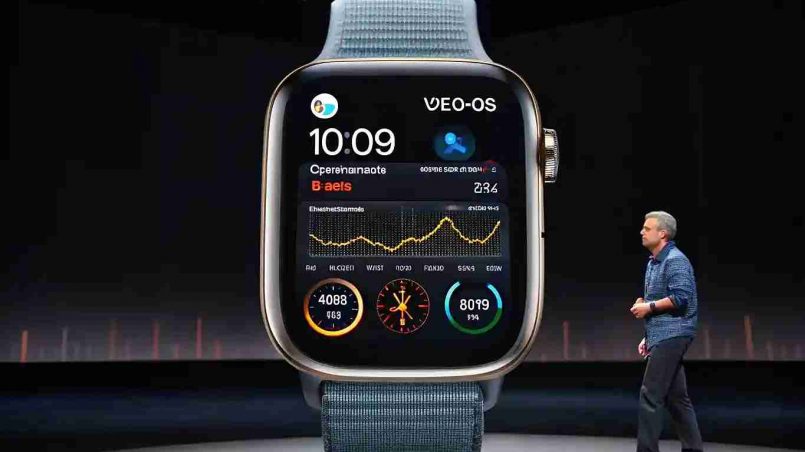
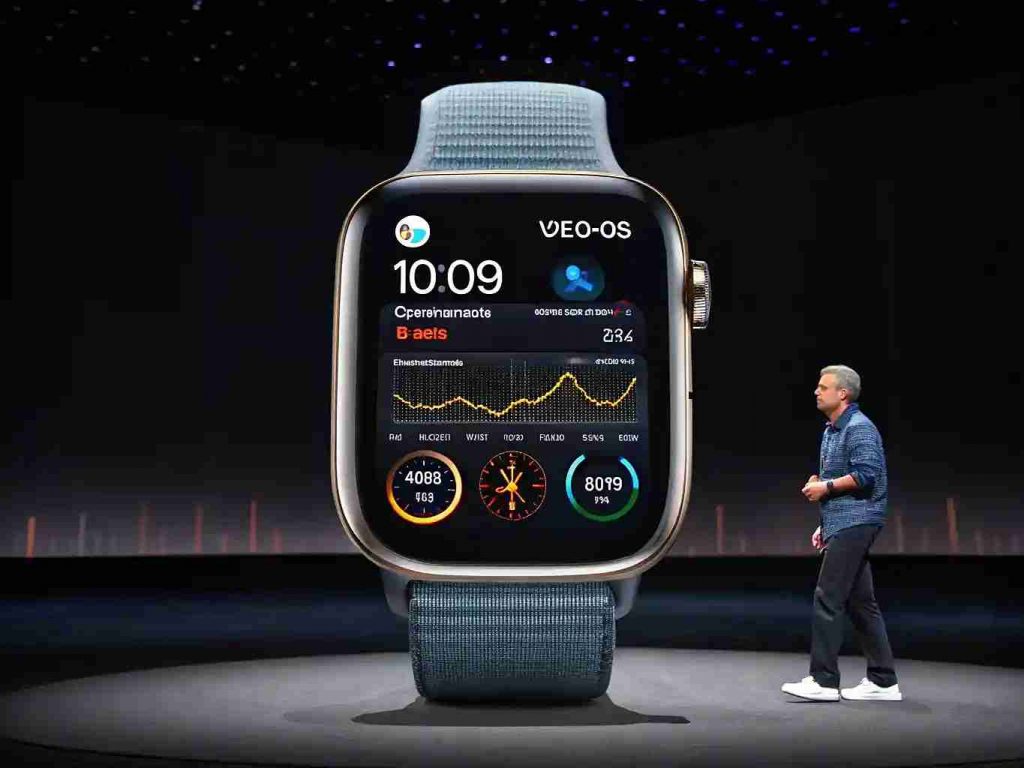
Apple Watch has never been just a small iPhone on the wrist. Its real value has always come from the moments when it notices something before the user does: an unusually high heart rate, a missed movement goal, a fall, a loud environment, a poor night of sleep, or a message that needs a quick reply. In 2026, artificial intelligence is likely to make this idea much stronger. Instead of adding AI as a loud, separate feature, Apple is moving toward a watch that understands patterns, timing, habits, health signals, workouts, and everyday routines in a more personal way.
The biggest shift will not be that the Apple Watch suddenly becomes a chatbot. That would not fit the device. A watch has a tiny screen, short interactions, limited battery life, and a very specific role in daily life. The more realistic future is quieter and more useful: smarter coaching during exercise, better health interpretation, more relevant widgets, improved message handling, stronger voice interaction, and a system that can decide what matters without forcing the user to dig through apps.
By 2026, Apple Watch will likely become one of the most important devices for practical AI, not because it can write essays or generate images, but because it sits directly on the body. It has access to movement, pulse, sleep, workouts, location, time of day, notifications, and personal habits. When AI is used carefully, that combination can turn raw data into guidance that feels timely, human, and easy to act on.
Ai will make fitness coaching more personal
The most visible AI direction for Apple Watch is fitness coaching. Workout Buddy in watchOS 26 already shows how Apple wants to use intelligence on the wrist: not as a complex dashboard, but as a voice that reacts to the user’s workout, history, and current effort. That idea is likely to become much more important in 2026.
Traditional fitness tracking is good at measuring. It can show pace, distance, calories, heart rate zones, splits, rings, and previous records. The problem is that numbers alone do not always help a person make a better decision. A beginner may not know whether a high heart rate is expected. A runner may not notice that their pace is fading. Someone returning after a break may push too hard because the watch shows old personal bests without enough emotional or physical nuance. AI can help by turning measurement into interpretation.
In 2026, Apple Watch could make workouts feel less generic. Instead of giving the same alerts to everyone, it can respond to individual patterns. If a person usually starts too fast and slows down after ten minutes, the watch could suggest a calmer opening pace. If someone often skips cooldowns, it could recommend a short recovery walk at the exact moment when it is most useful. If a user has slept badly, the watch could adjust its tone and suggest a lighter session instead of treating every day as a day for progress.
The most useful AI fitness features will probably be built around small moments rather than long speeches. During a run, the watch may tell the user that their cadence is steady, their final kilometre is improving, or their heart rate is higher than usual for the same pace. During strength training, it may recognize consistency, encourage longer rest, or point out that today’s session is already close to last week’s volume. For walking, cycling, hiking, and HIIT, the watch can make the experience feel more guided without demanding attention from the screen.
There are several areas where AI coaching could become especially useful:
- It can explain workout data in simple language instead of leaving users to interpret charts alone.
- It can adapt motivation to the user’s history, fitness level, and recent activity.
- It can suggest when to push, slow down, rest, or change the goal for the day.
- It can make exercise feel less isolated by adding timely voice feedback.
- It can help beginners build habits without overwhelming them with professional training terms.
The key challenge is balance. A watch that talks too much becomes annoying. A coach that sounds too dramatic can feel fake. Apple’s likely advantage is restraint. The best version of AI fitness on Apple Watch will not interrupt every few minutes. It will speak when there is a reason, stay silent when the user is focused, and use simple language that sounds closer to a helpful trainer than a technical report.
By 2026, Apple may also connect fitness AI more deeply with long-term trends. The watch could notice that a user performs better after certain sleep patterns, that recovery is weaker after late meals, or that outdoor walks improve consistency more than indoor workouts. The result would not be a medical diagnosis or a strict training plan, but a more personal understanding of what helps a specific person move better.
Health insights will become easier to understand
Health has become the central identity of Apple Watch. Heart notifications, ECG, fall detection, sleep tracking, cycle tracking, temperature sensing, blood oxygen features where available, and newer tools such as hypertension notifications and sleep score all point in the same direction: Apple wants the watch to catch meaningful signals early and present them in a way ordinary users can understand.
AI can make this much more useful, but only if it remains careful. Health data is sensitive, and Apple Watch cannot replace a doctor. The strongest role for AI on the wrist is not to diagnose, but to organize patterns and help users know when something deserves attention. This distinction matters. A vague warning can cause anxiety, while a clear explanation can help a person take the right next step.
In 2026, Apple Watch health features could become more conversational and more contextual. Instead of simply showing that sleep quality was low, the watch may explain that sleep was affected by shorter deep sleep, more wake time, or a later bedtime than usual. Instead of showing a resting heart rate trend without much explanation, it may say that the number has been higher than normal for several days and suggest reviewing stress, sleep, illness, or training load.
The watch already collects many different signals, but the user experience can still feel fragmented. Sleep lives in one area, workouts in another, heart data in another, and mindfulness somewhere else. AI can connect these signals into a clearer daily summary. A person should not need to open five charts to understand why they feel tired. The watch could say, in plain language, that yesterday included a hard workout, sleep was shorter than usual, and today may be better suited to lighter activity.
A useful AI health layer on Apple Watch 2026 may focus on patterns such as elevated heart rate, reduced sleep quality, lower activity, inconsistent recovery, and changes in daily rhythm. These are not always medical problems, but they are often signals that users care about. The watch could help separate normal variation from something worth monitoring.
The table below shows how AI may improve the main Apple Watch health and wellness areas in a practical way, without turning the device into a replacement for professional care.
| Area | What Apple Watch already tracks | How AI could improve it in 2026 |
|---|---|---|
| Sleep | Sleep duration, stages, consistency, sleep score | Explains why sleep felt poor and connects it with habits, timing, or activity. |
| Heart health | Heart rate, rhythm notifications, ECG on supported models | Highlights unusual trends in plain language and suggests when to review data. |
| Blood pressure risk | Hypertension notifications on supported models | Helps users understand long-term patterns and prepare clearer information for doctors. |
| Fitness recovery | Workouts, effort, pace, heart rate zones | Suggests lighter or harder activity based on recent sleep, strain, and consistency. |
| Stress and daily rhythm | Mindfulness, heart signals, activity changes | Detects routine changes and recommends small recovery actions at useful moments. |
| Medication and habits | Reminders, logs, daily routines | Makes reminders more timely and easier to connect with wellness patterns. |
This kind of AI would be valuable because it reduces confusion. Most users do not want more charts; they want to know what the charts mean. A well-designed Apple Watch experience in 2026 could turn health data into short, calm explanations: what changed, why it might matter, and what the user can reasonably do next.
Privacy will be especially important here. Health AI must feel safe. Apple’s broader AI strategy is built around on-device processing and privacy-focused cloud support for heavier tasks, and that approach fits the watch perfectly. Users may accept AI health summaries if they trust that their personal data is not being casually exposed or used in unclear ways.
The most powerful Apple Watch health feature in 2026 may not be one new sensor. It may be better interpretation of the sensors that already exist. A watch that understands trends, compares them with personal baselines, and communicates them gently could be more useful than a device that simply adds another number to the Health app.
Smart stack and notifications will become more predictive
The Apple Watch interface is built around speed. Most people do not browse a watch the way they browse a phone. They glance, tap, dismiss, reply, start a workout, check a timer, pay, unlock a door, or look at the weather. This makes AI especially important for the Smart Stack and notifications.
A small screen needs prioritization. If the watch shows everything, it becomes noisy. If it hides too much, it becomes unreliable. AI can help the system understand what the user is likely to need at a specific moment. This is where Apple Watch 2026 could feel much smarter without looking dramatically different.
The Smart Stack may become more aware of routine and environment. In the morning, it could show sleep, weather, calendar, and commute information. Before a regular gym session, it could surface the workout tile and music suggestion. During travel, it could bring boarding details, translation tools, local time, and wallet passes closer to the surface. If rain is expected near the time a user usually walks, the watch could show that information before the user asks.
Notifications are another major area for AI improvement. Apple Watch already helps users avoid pulling out the phone, but it can still become overwhelming. AI can decide which alerts need immediate wrist attention and which can wait. A delivery update, a message from a close contact, a calendar change, and a bank alert may deserve different treatment from a promotional email or low-priority app notification.
In 2026, the watch could become better at summarizing notification clusters. Instead of buzzing several times for a busy group chat, it could show one short summary and identify whether the user was mentioned directly. Instead of displaying a long message chain, it could offer a quick explanation of what changed. This would make the watch less distracting while keeping it useful.
The challenge is trust. If AI hides or delays something important, users will turn it off. Apple will need to make these features understandable and controllable. People should be able to decide which contacts, apps, and categories always break through. The watch can be intelligent, but it should not feel like it is making mysterious decisions behind the user’s back.
The best predictive features will likely feel almost invisible. A timer appears when cooking usually starts. A workout suggestion appears near the gym. A wallet pass shows near a train station. A reminder appears when the user actually has time to act on it. This is the kind of AI that fits Apple Watch: not spectacular, but useful dozens of times per week.
Siri on the wrist will need to become faster and more natural
Siri has always made sense on Apple Watch in theory. Speaking to the wrist is often easier than typing or tapping. In practice, voice assistants have been inconsistent. They can handle timers, weather, workouts, messages, and simple commands, but they often struggle with more natural requests. AI gives Apple a chance to make Siri on Apple Watch feel less rigid.
The watch is one of the best places for a better Siri because the interaction is usually short. Users are not asking for long documents. They want to start a workout, log a symptom, reply to a message, add a reminder, check a schedule, control smart home devices, or ask a quick question. If Siri can understand these requests more naturally, the watch becomes much more useful.
In 2026, Siri on Apple Watch could become better at handling corrections and follow-up commands. A user might say, “Remind me to call Anna when I leave work,” then add, “Actually, make it tomorrow.” The assistant should understand the change without forcing the user to start over. During a workout, a runner might ask, “How was my last kilometre compared with the one before?” and get a direct answer. At night, a user might ask, “How much sleep did I get compared with my usual weekday average?” and receive a simple summary.
Voice AI also matters for accessibility. A smarter Siri can help people who find small screens difficult, who are moving, carrying bags, exercising, cooking, or unable to use both hands. Apple Watch already supports gestures and voice commands, and AI can make those interactions more forgiving.
The main limitation will be hardware. The Apple Watch has less processing power and battery capacity than an iPhone. Many advanced AI features may still depend on a nearby iPhone that supports Apple Intelligence. That is not necessarily a problem if the experience feels seamless. Users do not care which device processes the request as long as the answer arrives quickly and privately.
There is also a design question. A watch should not become a place for long AI conversations. The better goal is short, useful voice interaction. Siri should answer clearly, act correctly, and avoid turning every request into a full-screen experience. If Apple gets that right, the Apple Watch 2026 could become the most natural Siri device in the ecosystem.
Communication will become quicker and more personal
Messaging from a watch is useful but limited. The screen is small, typing is slow, and voice dictation is not always convenient. AI can improve this by making communication faster, more accurate, and more natural.
Smart replies already exist in different forms, but AI can make them better. Instead of offering generic responses like “OK” or “Thanks,” Apple Watch could suggest replies that match the message, the relationship, and the user’s usual tone. If a friend asks about dinner, the watch could suggest a casual answer. If a colleague asks about a meeting, it could suggest something more professional. If a family member sends a time-sensitive question, the watch could offer a direct response with location or calendar awareness, when permitted.
Translation is another important area. A watch is an ideal device for travel because it is always accessible. AI-powered translation on the wrist could help with short conversations, signs, transport questions, and quick messages. The experience does not need to replace a full translation app on iPhone. It only needs to make common travel moments less stressful.
Call features may also become smarter. AI can help screen calls, summarize missed communication, and identify what needs attention. For example, if a user misses several calls and messages while exercising, the watch could show a short summary instead of a messy list. If a voicemail or message contains a time, place, or request, the watch could help turn it into a reminder or calendar item.
The more personal communication becomes, the more important control becomes. Users should be able to edit replies easily and avoid sending anything that feels too automated. AI should help write, not pretend to be the user. On a watch, the best AI communication tools will save seconds while still leaving the final decision in human hands.
Apple Watch 2026 may also become better at understanding when not to interrupt. If the user is asleep, driving, in a workout, in a meeting, or using Focus mode, AI can manage communication more intelligently. A message from a close contact may still break through. A less urgent notification may wait. This makes the watch feel more respectful, not just more powerful.
Battery, privacy and hardware will decide how far ai can go
AI on Apple Watch sounds exciting, but the device has strict limits. Battery life, heat, chip performance, screen size, and privacy all shape what Apple can realistically deliver. The 2026 Apple Watch will not become a miniature AI laptop. It will need to choose carefully which features run on the watch, which depend on the iPhone, and which use Apple’s privacy-focused cloud systems.
Battery life is the most obvious issue. AI features can require more processing, and processing uses power. A watch that offers smarter coaching but dies before bedtime would not be a success. Apple will likely keep many AI tasks lightweight on the watch itself, while sending heavier requests to the paired iPhone when possible. This is especially likely for generative voice, advanced Siri requests, message understanding, and complex summaries.
Hardware will also create feature differences between models. Newer watches may support faster gestures, better on-device analysis, improved health processing, and more responsive AI features. Older models may receive some software improvements but depend more heavily on the iPhone. Users should expect Apple Intelligence features on the watch to remain tied to the broader Apple ecosystem, especially newer iPhones.
Privacy is not just a marketing point here. Apple Watch data can reveal sleep habits, health patterns, location routines, workouts, stress, and communication behaviour. If AI is going to interpret that information, users need clear protections. Apple’s privacy-first AI architecture is one of the reasons the company can make a stronger case for health and personal intelligence than many competitors. The more sensitive the data, the more important it is that processing feels controlled and transparent.
The design philosophy will matter as much as the technology. Some companies may try to make wearables feel like AI companions. Apple is more likely to make the watch feel like a practical assistant that appears only when needed. That approach may be less flashy, but it fits the device better.
For Apple Watch 2026, the most impressive AI features may be the ones users stop noticing. A better suggestion at the right time. A calmer notification experience. A workout voice that knows when to encourage and when to stay quiet. A health summary that explains a trend without causing panic. A Siri request that works naturally on the first try. These are small improvements individually, but together they can change the feeling of wearing the device every day.
Apple Watch has always been strongest when it helps users act at the right moment. AI can make those moments more personal, more accurate, and more useful. The future of the watch is not about turning the wrist into another screen full of complicated tools. It is about making the device understand more, interrupt less, and help better.
Conclusion
Apple Watch 2026 is likely to show that the most useful AI is not always the most dramatic. On a phone or computer, artificial intelligence often means writing, creating, searching, and editing. On a watch, it means something more immediate: understanding the body, the moment, the habit, the message, and the next small action.
The strongest AI features will be practical. Fitness coaching will become more personal. Health insights will become easier to understand. Smart Stack and notifications will become more predictive. Siri will become more natural. Messages, calls, and translations will become quicker. At the same time, battery life, privacy, and hardware limits will decide how far Apple can push these ideas.
The Apple Watch 2026 may not need one spectacular feature to feel new. Its real progress could come from dozens of better decisions made quietly throughout the day. That is exactly where AI belongs on the wrist: not as a gimmick, but as a layer of intelligence that helps the watch become more useful, more personal, and less demanding.
